

If you’re searching for “NDIS recovery coach Bendigo”, the closest provider on a directory isn’t automatically the right fit. A recovery coach should listen to what matters to you, respect your choices and work towards your goals at a manageable pace. It’s understandable to want clarity first: recovery coaching can sound similar to support coordination, and it may not be clear what the role includes or whether your plan can fund it.
This guide explains how a psychosocial recovery coach can support you to build skills, connect with services and work towards your own recovery goals. It also clarifies how coaching differs from clinical treatment and support coordination, so you can consider which support best matches your needs.
You’ll find practical questions to ask about a provider’s approach, experience, communication and service agreement. We’ll also cover what to check in your NDIS plan and how to discuss your options in Bendigo. The aim is to help you choose based on fit and shared goals, rather than a directory listing alone.
Key Takeaways
- An NDIS recovery coach should work collaboratively towards your goals, help build everyday capacity and respect your preferences.
- Use a simple self-check of your goals, current barriers and preferred support style to decide whether recovery coaching may suit you.
- Compare providers by asking about communication, goal-setting, relevant experience and how progress and feedback are reviewed.
- Before starting, clarify what you want support with, check your plan’s funding and agree on how you’ll review the support together.
- The Possible Bridge provides psychosocial recovery coaching in Victoria, including Bendigo. Ask the provider about your needs, service fit and current availability.
What does an NDIS recovery coach in Bendigo help you do?
Choosing support can feel personal, especially if you’re unfamiliar with recovery coaching. A useful starting point is to understand the role, then consider whether its approach fits your goals and preferences. The National Disability Insurance Scheme (NDIS) funds supports for eligible participants, and psychosocial recovery coaching is one type of support that may be included in a plan.
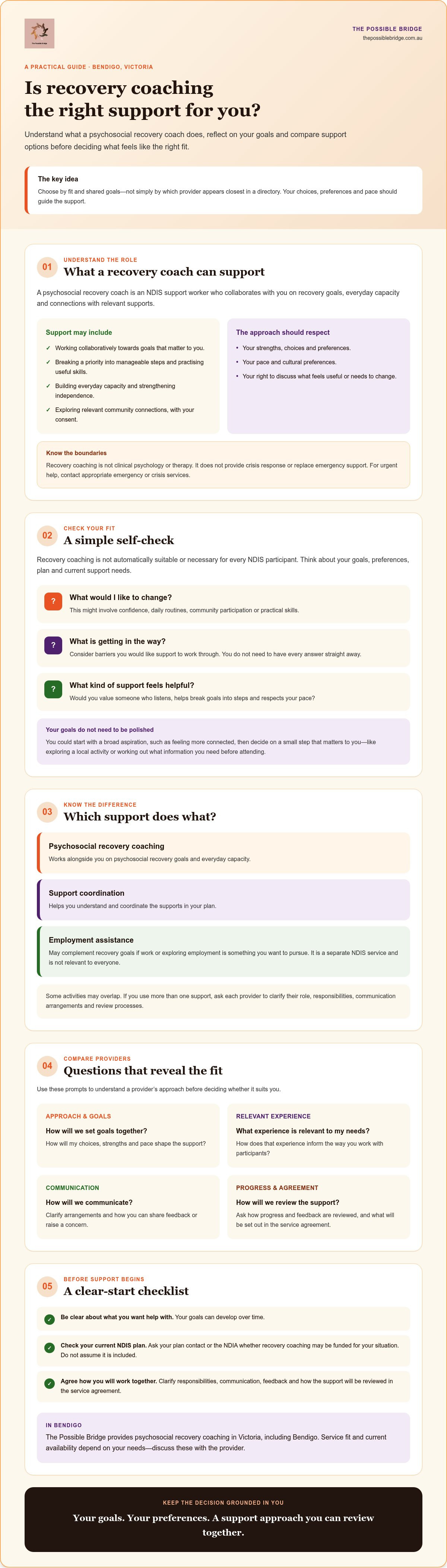
A psychosocial recovery coach is an NDIS support worker who collaborates with a participant on recovery goals, everyday capacity and connections with relevant supports. The work should reflect the participant’s strengths, choices, pace and cultural preferences. It isn’t clinical psychology or therapy, and it doesn’t provide crisis response or replace emergency support. If you need urgent help, contact appropriate emergency or crisis services.
What might recovery coaching look like in everyday life?
Coaching starts with what matters to you. You and your coach might identify a priority, break it into manageable steps and practise skills that support it. For example, if building a steadier routine is important, you could explore planning strategies together. If feeling more connected is a goal, you might discuss community options in Bendigo and, with your consent, explore relevant connections. Confirm what’s available and suitable. These examples aren’t promises of a particular service or result.
The Possible Bridge provides psychosocial recovery coaching, with a focus on helping people set goals, build skills, strengthen independence and connect with community resources. The support should remain collaborative: your goals guide the work, and you can discuss what feels useful or needs to change.
How is a recovery coach different from other NDIS supports?
Recovery coaching and support coordination have distinct purposes, though some activities may overlap. A recovery coach focuses on working alongside you on psychosocial recovery goals and everyday capacity. Support coordination focuses on helping you understand and coordinate the supports in your plan. If you use both, ask each provider to explain their role and clarify where responsibilities sit.
Employment assistance may complement recovery goals if work or exploring employment is something you want to pursue. It won’t be relevant to everyone, and it isn’t a required part of recovery coaching. The Possible Bridge offers employment assistance as a separate NDIS service. Before starting, check that each support matches your goals and ask for responsibilities, communication arrangements and review processes to be set out clearly in the service agreement.
How to decide whether recovery coaching fits your NDIS goals
Recovery coaching isn’t automatically suitable or necessary for every NDIS participant. Whether it may help depends on your goals, preferences, plan and current support needs. Consider whether you want collaborative support to work through personal priorities and build everyday capacity, rather than assuming a particular service is the right fit.
A useful starting point is to ask yourself:
- What would I like to change? This could involve confidence, daily routines, community participation or practical skills.
- What’s getting in the way? Think about barriers you’d like support to work through. You don’t need to have every answer straight away.
- What kind of support feels helpful? Consider whether you’d value working alongside someone who listens, helps break goals into steps and respects your pace.
What goals could you bring to a recovery coach?
Your goals belong to you, and they can change as your circumstances do. A broad aspiration such as feeling more connected could become a small, observable step you choose, like exploring a local activity or deciding what information you need before attending. The national framework for recovery-oriented mental health services offers context for an approach that values a person’s strengths, choices and direction.
You don’t need to arrive with polished goals. You can discuss what matters now, then decide together whether coaching feels like a useful way to explore it.
How can you check whether your plan may fund this support?
Before choosing an NDIS recovery coach in Bendigo, check your current plan and ask your plan contact or the NDIA whether recovery coaching may be funded for your situation. Don’t assume the support is included or that your plan has enough funding available. Check current NDIS guidance and pricing arrangements too, as plan details and applicable rules can change.
If you’re still learning about access to the scheme, read this guide to NDIS eligibility and access requirements. You can also discuss recovery coaching options with The Possible Bridge to ask whether its psychosocial recovery coaching may fit your goals.
A simple decision summary: Recovery coaching may be worth exploring if you have a goal you want to work towards, prefer collaborative support and can confirm the service fits your plan. If those points are unclear, write down your questions and discuss them with someone you trust or your plan contact before deciding.
How to compare NDIS recovery coaches in Bendigo
A useful comparison goes beyond location. A suitable recovery coach should offer personal fit, clear responsibilities and an approach that makes sense for your goals. Ask each provider similar questions so you can compare how they communicate, involve you in decisions and review support over time.
| What to compare | Questions to ask | Signs of a clear answer |
|---|---|---|
| Communication and choice | How will you learn about my goals, preferences and cultural needs? How will I be involved in decisions? | The coach explains how your views guide support and checks what communication style works for you. |
| Goal-setting and reviews | How do we agree on goals and check whether support is useful? | They describe a practical review process and welcome adjustments if your priorities change. |
| Relevant experience | What experience do you have that relates to my needs and goals? | The response is specific to your situation without promising particular outcomes. |
| Bendigo service arrangements | Do you currently have availability in Bendigo? Is support in person, remote or both? How are travel and local community connections handled? | The provider confirms current options, explains any travel arrangements and checks your consent before discussing connections with others. |
Questions to ask before choosing a recovery coach
Ask who will provide your support, how you can contact them and what happens if your needs or preferences change. You can also ask how to raise a concern or request a different approach. Clear, direct answers help you understand what working together may look like before you decide.
What should a clear service agreement explain?
Read the service agreement carefully. It should set out the agreed supports, each party’s responsibilities, communication arrangements and how reviews will happen. Ask how cancellations, travel and service records are handled, and request a plain-language explanation of anything unclear. Take the time you need to consider the details. You don’t have to agree under pressure.
Before starting, confirm the provider’s current NDIS registration details, service scope and availability directly. The Possible Bridge provides psychosocial recovery coaching in Victoria, including Bendigo, but confirm current local availability and delivery options with the provider. These questions can help you assess whether an NDIS recovery coach Bendigo option aligns with your needs, not just your postcode.
What to prepare before starting recovery coaching in Bendigo
You don’t need a perfect plan or a polished explanation of what’s going on before speaking with a provider. A few notes can help you feel prepared, while leaving room for questions and priorities to emerge during the conversation.
A simple first-meeting checklist
Use this flexible sequence to shape an initial conversation with an NDIS recovery coach in Bendigo:
- 1. Name what you’d like to work towards. Note a change you hope for, such as building a routine, feeling more confident or taking part in a community activity. Include any immediate practical priorities.
- 2. Gather relevant plan information. Have your current NDIS plan or the relevant details available if you can. If you’re unsure whether recovery coaching is included or available to you, ask your plan contact or the NDIA to clarify funding.
- 3. Share what support feels like for you. Note what has helped before, what hasn’t felt right and how you prefer to communicate. You can also mention boundaries, cultural preferences or anything you’d like the coach to understand.
- 4. Decide who you want involved. If you’d like support during the conversation, consider inviting a trusted person. It’s your choice whether they join and what you share with them.
- 5. Confirm practical arrangements. Ask the provider to clarify current Bendigo availability, whether support can be delivered in person or remotely, funding arrangements and what happens next.
Once you’ve gathered these points, you can discuss recovery coaching with The Possible Bridge. The organisation provides psychosocial recovery coaching across Victoria, including Bendigo. Confirm current availability and delivery options directly before making plans.
Agreeing on goals, communication and reviews
If you decide to proceed, work with the provider to choose manageable first steps. Agree on what progress might look like from your perspective, whether that means trying a strategy, practising a skill or feeling clearer about a next step. Your measure of progress should reflect what matters to you, not someone else’s assumptions.
Before support begins, make sure you understand how and when you’ll communicate, what each person is responsible for and how you can raise concerns. Agree on when to revisit your goals and what to do if your circumstances or preferred approach change. These details create a shared starting point while leaving room to adjust as you learn what works for you.
Finding a recovery coach in Bendigo: your next steps with The Possible Bridge
Move forward one step at a time: clarify what you’d like support with, compare how providers work, then confirm funding and practical arrangements before agreeing to start. Choosing an NDIS recovery coach Bendigo participants can work with involves more than finding a local name. It also means considering whether the provider listens, explains its role clearly and can discuss an approach that fits your preferences.
The Possible Bridge provides NDIS psychosocial recovery coaching across Victoria, including Bendigo. Its approach focuses on working towards participant-led goals, building skills, strengthening independence and connecting with community resources. Capacity in Bendigo and delivery options can change, so confirm these directly rather than assuming a particular location or format is available.
What to share when you make an enquiry
You can keep an initial enquiry brief. Share that you’re in Bendigo, outline the broad goals you’d like to explore and let the provider know how you prefer to communicate. You don’t need to describe everything or disclose information you’re not comfortable sharing at this stage.
To understand whether the support may suit you, ask:
- Is recovery coaching currently available for participants in Bendigo, and what delivery options can you discuss?
- How do you match a coach with a participant’s goals, preferences and communication needs?
- What does the service include, and how are responsibilities explained in the service agreement?
- What information should I check about my plan funding before deciding on next steps?
These questions can help clarify what happens next without committing you to support. You can ask for details in writing or take time to consider them.
How to make a confident choice
Compare the provider’s answers against your priorities. A convenient location matters, but so do feeling heard, understanding how decisions are made and knowing how you can raise concerns. Check the provider’s current NDIS registration details, service scope, Bendigo availability and delivery options directly. Confirm your plan funding and clarify the service agreement before agreeing to commence.
It’s also helpful to understand what the service doesn’t provide. The Possible Bridge does not provide NDIS plan management, clinical psychology or 24/7 crisis intervention. Recovery coaching is not a substitute for clinical treatment or emergency support. If you need those types of help, discuss suitable options with the relevant service or professional.
You can talk with The Possible Bridge about recovery coaching and ask about availability, fit and possible next steps.
Take the next step towards support that fits
Choosing a recovery coach starts with your priorities. Look for someone who listens, respects your choices and can explain how support will work in practice. Before agreeing to begin, compare providers, check your plan funding and confirm service details, including current availability in Bendigo.
The Possible Bridge provides psychosocial recovery coaching as one of its NDIS services and operates across Victoria, including Bendigo, Melbourne, Ballarat and Geelong. Ask the team directly about current capacity, delivery options and whether its approach feels right for your goals. A good fit is one you can discuss openly, with clear expectations and room to shape support together.
If you’re ready to explore your options, contact The Possible Bridge about recovery coaching. A conversation can help you decide whether an NDIS recovery coach Bendigo is the right next step for you. Move forward at your own pace, with your goals guiding the way.
Frequently Asked Questions
What does an NDIS recovery coach do?
An NDIS psychosocial recovery coach works collaboratively with a participant on goals, everyday capacity and connections with relevant supports. This might include exploring a manageable routine, practising practical skills or identifying community resources to consider. The participant’s choices and priorities guide the support. Recovery coaching is not clinical psychology or therapy, and it doesn’t replace crisis or emergency services. Discuss the coach’s responsibilities and service scope before starting.
Is recovery coaching available through the NDIS in Bendigo?
Psychosocial recovery coaching is an NDIS service, and The Possible Bridge provides it in Victoria, including Bendigo. Whether the provider can support you now, and whether the service is funded through your plan, needs to be confirmed directly. Check your plan and ask your plan contact or the NDIA about funding. Also ask the provider about current Bendigo availability, delivery options and next steps before making arrangements.
How do I choose an NDIS recovery coach in Bendigo?
Compare how each coach listens, involves you in decisions and works towards goals, rather than choosing by location alone. Ask about experience relevant to your needs, communication arrangements, review practices and what happens if your preferences change. Confirm who will provide the support, current Bendigo availability and service agreement details. A clear answer should help you understand the proposed support without pressure or promises of a particular outcome.
Can a recovery coach help me connect with community supports?
A recovery coach may work with you to explore relevant community supports and connections that relate to your goals. For example, you might discuss local activities or services in Bendigo that you’re interested in learning more about. Any connection should reflect your choices and consent, and availability needs to be checked. Ask the coach what they can help with and how responsibilities for contacting or coordinating with other services will be agreed.
How much does an NDIS recovery coach cost?
There isn’t one price that applies to every participant or provider. Charges and funding depend on your plan, the agreed support and current NDIS pricing arrangements. Before support begins, ask the provider for its applicable rates, how the support will be billed and what the service agreement says. Check your available plan funding with your plan contact or the NDIA, and don’t assume a cost will be covered until you’ve confirmed it.
What happens if recovery coaching does not feel like the right fit?
Raise your concerns with the provider and explain what feels unhelpful or what you’d like to change. You can ask to review goals, communication, responsibilities or the way support is delivered. Check your service agreement for how changes or ending the arrangement are handled. You’re entitled to take time to consider your options and discuss them with a trusted person or plan contact. A provider should explain next steps clearly, without pressuring you.
Can a recovery coach provide therapy or crisis support?
No. Recovery coaching is collaborative NDIS support, not clinical psychology or therapy, and it isn’t a crisis response service. A coach may help you work towards recovery goals and connect with other supports, but they don’t replace a clinician or emergency service. Ask the provider to explain the service boundaries before starting, so you know what to expect. For urgent risk or an emergency, contact appropriate crisis or emergency services.


