

Acronyms shouldn’t be the first barrier to understanding disability support. If you’ve searched “what does ndis stand for”, you may want more than the full name: who runs the scheme, what it does and where to begin.
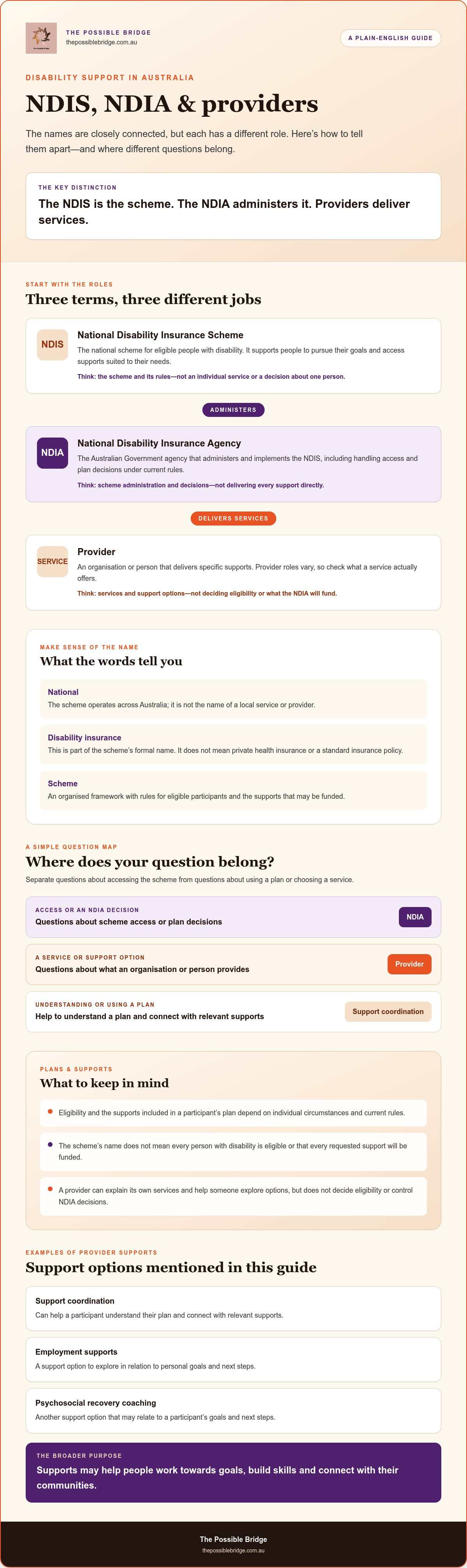
It’s easy to confuse the NDIS with the NDIA. The NDIS is the National Disability Insurance Scheme, while the NDIA, or National Disability Insurance Agency, administers it. One is the scheme; the other is the agency responsible for running it. Knowing the difference can make official information easier to follow and help you direct questions to the right place.
This guide explains the NDIS’s broad purpose, the NDIA’s role and what the distinction means when you’re looking for support in Australia in 2026. It also outlines how supports may help participants work towards goals, build skills and connect with their communities. You don’t need to know every eligibility detail to understand the basics or identify a sensible next step.
Key Takeaways
- Looking up “what does ndis stand for” is a useful first step towards understanding the scheme and its role in disability support.
- Learn how the NDIA’s role differs from a provider’s, so you know where to direct questions about decisions and services.
- Individual circumstances and current rules influence eligibility and the supports included in a participant’s plan.
- Separate questions about accessing the scheme from questions about using a plan or choosing a provider.
- Explore how support coordination, employment assistance and psychosocial recovery coaching may relate to personal goals and next steps.
What does NDIS stand for? The meaning in plain English
NDIS stands for National Disability Insurance Scheme. In plain English, it’s an Australian scheme that supports eligible people with disability to pursue their goals and access supports suited to their needs.
The National Disability Insurance Scheme (NDIS) funds supports for eligible people with disability, with individual decisions shaped by a person’s circumstances and the rules in place. The name describes the overall framework. It doesn’t mean every person with disability is eligible or that every requested support will be funded.
That distinction helps make the acronym clearer. The NDIS is the scheme; the National Disability Insurance Agency (NDIA) administers it. The agency makes decisions about access and supports under the scheme’s rules, while providers deliver the services they offer. A provider can explain its services and help someone explore support options, but doesn’t decide eligibility or control NDIA decisions. For background on the scheme’s history and purpose, see this overview of the National Disability Insurance Scheme (NDIS).
What does each word in National Disability Insurance Scheme mean?
National means the scheme operates across Australia. It isn’t the name of a local service or provider. Disability insurance is part of the scheme’s formal name, but it doesn’t mean private health insurance or a standard insurance policy. Scheme means an organised framework with rules for eligible participants and the supports that may be funded. Together, the words describe a national system, not an individual service or a decision about one person.
Why do people search for the NDIS meaning?
People may first see “NDIS” on a form, in a conversation with a support provider or in a plan. The acronym can make it harder to tell whether information is about the scheme, the agency that administers it or a service delivered by a provider. Starting with what does ndis stand for gives you a useful map: identify the scheme, then work out who is responsible for your next question.
Understanding the name won’t answer every personal question. Eligibility and funded supports depend on individual circumstances and current rules, so this isn’t an eligibility guide. It’s a starting point for recognising the terms and knowing what to clarify next.
NDIS or NDIA? Understand who runs the scheme and who provides support
The terms are closely connected, but they don’t mean the same thing. NDIS names the scheme. NDIA stands for the National Disability Insurance Agency, the Australian Government agency that administers and implements it. Support providers are separate organisations that deliver services to participants.
The NDIS is the scheme, the NDIA is the agency that runs it, and providers deliver the services participants use. Keeping those roles distinct helps you direct questions to the right place. The NDIA is responsible for scheme administration and decisions made under its rules. A provider can explain its own services and help a participant connect with them, but it doesn’t decide who is eligible or what the NDIA will fund.
| Acronym | Full name | Role |
|---|---|---|
| NDIS | National Disability Insurance Scheme | The national scheme for eligible people with disability. |
| NDIA | National Disability Insurance Agency | The agency that administers and implements the scheme. |
| Provider | Service provider | An organisation or person that delivers specific supports. |
What does NDIA stand for, and what does the agency do?
The National Disability Insurance Agency (NDIA) administers the NDIS. This includes putting the scheme into practice and handling participant access and plan decisions in line with current rules. The agency’s role is different from delivering every support directly. For an official overview of the scheme and its purpose, read What is the NDIS.
Where do NDIS providers fit in?
Providers deliver the particular services they offer. Their roles vary, so check what an organisation actually provides rather than assuming every NDIS provider offers the same supports. For example, support coordination can help a participant understand their plan and connect with relevant supports. It isn’t the same as making NDIA decisions or administering the scheme.
If you know what kind of help you’re looking for, ask providers what they offer and how their services may relate to your goals. The Possible Bridge offers support coordination and employment supports, as well as psychosocial recovery coaching. These services can help people work towards goals, build skills and connect with community resources. A provider can discuss its own role; questions about access or funding belong with the NDIA.
What does the NDIS mean for participants, plans and supports?
Knowing what does ndis stand for explains the name, but it doesn’t confirm that someone can access the scheme or receive a particular support. The NDIS journey is individual. A person can check current official information, apply for access and, if eligible, work through a plan that reflects their circumstances and goals.
A plan isn’t the scheme itself. It sets out a participant’s goals and the supports the NDIA has approved under the applicable rules. The supports in one person’s plan may differ from those in another’s. Examples can help explain what a support involves, but can’t predict what will be funded for an individual.
Does the NDIS provide the same supports to everyone?
No. Eligibility and funded supports depend on a person’s circumstances and the scheme’s current rules. Even people with similar goals may have different supports in their plans. General descriptions can help you understand what a support involves, but they aren’t a guarantee of funding or a substitute for checking official guidance about a specific support.
If you’re trying to understand a particular decision, first identify whether your question is about access to the NDIS, a support in an existing plan or a provider’s service. Then check the relevant official NDIS information or contact the NDIA for guidance. A provider can explain its services, but can’t determine eligibility or promise that a support will be funded.
How is an NDIS plan different from the scheme itself?
The scheme sets the overall framework. A participant’s plan applies that framework to their individual goals and approved supports. Keep three things separate: the plan describes goals and funded supports; plan management concerns how plan funding is handled; and providers deliver the services they offer. These roles are connected, but they aren’t interchangeable.
For example, a plan may include a support that helps someone work towards a personal goal. Whether that support is funded depends on the person’s plan and the applicable rules. A provider can explain how its service works, but can’t change the plan or decide what the NDIA funds.
Provider quality and safety are separate from questions about access and planning. The NDIS Quality and Safeguards Commission is an official source of information about quality and safeguards in NDIS services. Checking the right source for each question can help you take the next step with greater confidence.
How can you use the NDIS meaning to find the right next step?
Once you can distinguish the scheme, the agency and providers, it’s easier to work out where your question belongs. If you searched “what does ndis stand for” because you’re unsure what to do next, start by deciding whether you’re asking about access, an existing plan or a service you’re considering.
- Identify your question. If you want to know whether someone may be eligible, look for information about NDIS eligibility and access requirements. If they already have a plan, focus on its goals and supports. If you’re looking for help, consider what kind of provider or service may be relevant.
- Check official guidance. Use the NDIS website for current scheme and access information. Rules and guidance can change, so confirm the current position with the NDIA rather than relying on older information or assuming another person’s experience applies to you.
- Ask a suitable support service. Once you know what kind of assistance you’re exploring, ask the provider about its services, role and fit for your needs. A provider can explain what it offers, but can’t determine NDIS eligibility or guarantee funding.
Where should you check NDIS information first?
For questions about eligibility, access or scheme rules, start with official NDIS information. Contact the NDIA if you need clarification about your circumstances. A provider or general article can help explain terminology, but neither replaces an official decision or an individual assessment. Treat information as a starting point, particularly if it may have changed since you last checked.
What can a support provider help you work through?
For questions about using supports or finding services, a provider can describe its role and help you understand practical options. The Possible Bridge offers support coordination, employment assistance and psychosocial recovery coaching. Support coordination, for example, can help a person navigate and connect with relevant supports; it isn’t NDIS administration and doesn’t influence NDIA decisions.
If you’re exploring these types of support in Victoria, you can ask The Possible Bridge about its support services. A conversation can help clarify what the provider offers and whether it may suit your goals. Eligibility and funding questions remain with the NDIA.
How The Possible Bridge helps you take an NDIS next step in Victoria
Understanding what does ndis stand for is a useful starting point. The next step is often more personal: working out what support may help with your goals, skills and connection to community. The Possible Bridge provides NDIS-registered support services in Victoria, focused on helping people identify practical steps that fit their circumstances.
Which Possible Bridge supports may fit your goals?
The right service depends on what you’re working towards. The Possible Bridge offers three types of support:
- Support coordination can help you navigate your supports and connect with relevant services. It can help you make sense of options, but it doesn’t administer your NDIS plan.
- Employment assistance can support you to build skills and pursue work-related goals.
- Psychosocial recovery coaching offers person-centred support as you work towards goals, build skills and connect with your community. It is not clinical psychology.
The Possible Bridge works across Melbourne, Ballarat, Geelong, Bendigo and surrounding regional areas. Availability can vary, so check whether support is currently available in your area and whether it matches your needs.
What to ask before choosing an NDIS provider
A first conversation can help you assess whether a service is a practical fit. Consider asking:
- Does the provider offer the specific support I’m looking for, and is it available in my area?
- How will the support relate to my goals and the outcomes I want to work towards?
- How can I share my communication preferences and let the provider know what works for me?
- How will we review whether the support continues to suit my needs?
These questions help you compare a provider’s actual services with what you’re hoping to achieve. A provider can explain its role and discuss possible next steps, but it can’t decide NDIS eligibility or guarantee that a support will be funded.
If you’d like to explore whether support coordination, employment assistance or psychosocial recovery coaching could suit your goals, you can discuss your support options with The Possible Bridge. You don’t need to have every detail worked out before starting a conversation.
Take your next NDIS step with confidence
Knowing what does ndis stand for is a helpful first step: the NDIS is the scheme, the NDIA administers it, and providers deliver their own services. Your circumstances and current rules shape questions about eligibility and funded supports, so check official guidance for decisions about your situation.
If you’re looking for practical support, focus on the goals you want to work towards and the kind of help that may suit you. The Possible Bridge offers support coordination, employment assistance and psychosocial recovery coaching across Melbourne, Ballarat, Geelong, Bendigo and surrounding regional areas. Check current availability in your location and ask how a service may fit your needs.
You don’t need to have every answer before exploring your options. Talk with The Possible Bridge about your next step and discuss which support may relate to your goals. A clear question can be a steady place to begin.
Frequently Asked Questions
What does NDIS stand for in Australia?
NDIS stands for National Disability Insurance Scheme. It’s an Australian scheme that supports eligible people with disability to access funded supports related to their needs and goals. The name refers to the scheme, not a specific provider or an automatic entitlement to funding. If you’ve been asking what does ndis stand for, that’s the full name; whether someone can access the scheme depends on their circumstances and current rules.
What does NDIA stand for, and is it the same as NDIS?
NDIA stands for National Disability Insurance Agency. It isn’t the same as the NDIS: the NDIS is the scheme, while the NDIA administers and implements it. The agency handles decisions about access and participant plans under the scheme’s rules. Providers are separate organisations that deliver their own services. They can explain what they offer, but they don’t make NDIA decisions about eligibility or funding.
Is the NDIS only for people with a physical disability?
No. The NDIS isn’t limited to physical disability. People may have different types of disability, including intellectual, sensory or psychosocial disability. However, a person’s diagnosis or disability type alone doesn’t establish whether they’re eligible. Access decisions depend on individual circumstances and the scheme’s current requirements. Check official NDIS information for guidance about access, rather than assuming a particular disability automatically qualifies someone.
Can a support provider approve someone for the NDIS?
No. A support provider can’t approve someone for the NDIS or decide what the NDIA will fund. Providers deliver services within their own scope and may be able to explain how those services work. Questions about applying for access or an official decision should be directed to the NDIA. Keeping these roles separate helps you seek scheme information from the right place and provider information from the service itself.
How does the NDIS work once someone becomes a participant?
After someone gains access to the scheme, their plan sets out their goals and the supports approved for their individual circumstances. The participant can then explore relevant services and use their plan in line with its funding and current rules. Not every service or support is funded for every participant. If you’re unsure whether a particular support is included or how to use the plan, check the plan details and seek appropriate official guidance.
Does the NDIS provide support coordination?
Support coordination may be funded in a participant’s plan if it’s approved for their circumstances; it isn’t automatically included for everyone. A support coordinator can help a participant understand and connect with relevant supports, but doesn’t administer the NDIS or decide what the NDIA funds. The Possible Bridge offers support coordination. Check the plan and discuss the provider’s specific service to understand whether it may relate to your goals.
Where can I get help understanding the NDIS in Victoria?
For questions about scheme rules, access or funding decisions, start with official NDIS information or contact the NDIA. To explore services, ask a provider what it offers and whether it currently serves your area. The Possible Bridge offers support coordination, employment assistance and psychosocial recovery coaching across Melbourne, Ballarat, Geelong, Bendigo and surrounding regional areas. Confirm current availability directly, as providers don’t determine eligibility or control NDIA decisions.


