
What if the best place to start isn’t with a diagnosis, but with what’s harder to do day to day? A psychosocial disability describes the impact a mental health condition can have on everyday activities and participation. It’s not the diagnosis itself, and having a mental health condition doesn’t automatically mean someone has a psychosocial disability.
If you’re unsure how to explain changing support needs, you’re not alone. A person may manage a task one day and find it difficult another day. Describing what changes, how often support is needed and what happens without it can make those needs clearer.
This article explains psychosocial disability in everyday language and offers practical ways to identify support needs. You’ll also learn how NDIS supports may relate to personal goals, why a diagnosis alone doesn’t establish eligibility, and where to begin exploring services and community connections in Victoria. The focus is on the person, their priorities and the supports that may help them participate in daily life.
Key Takeaways
- Psychosocial disability is best understood through its effects on a person’s participation, routines and independence.
- Notice patterns in what makes tasks easier or harder, and record which strategies help.
- Use specific examples from everyday life to prepare for conversations about support and personal goals.
- A mental health diagnosis alone doesn’t establish NDIS eligibility; check current access requirements with the NDIA.
- Depending on a person’s plan and goals, recovery coaching, support coordination or employment assistance may be worth exploring.
What does psychosocial disability mean in everyday life?
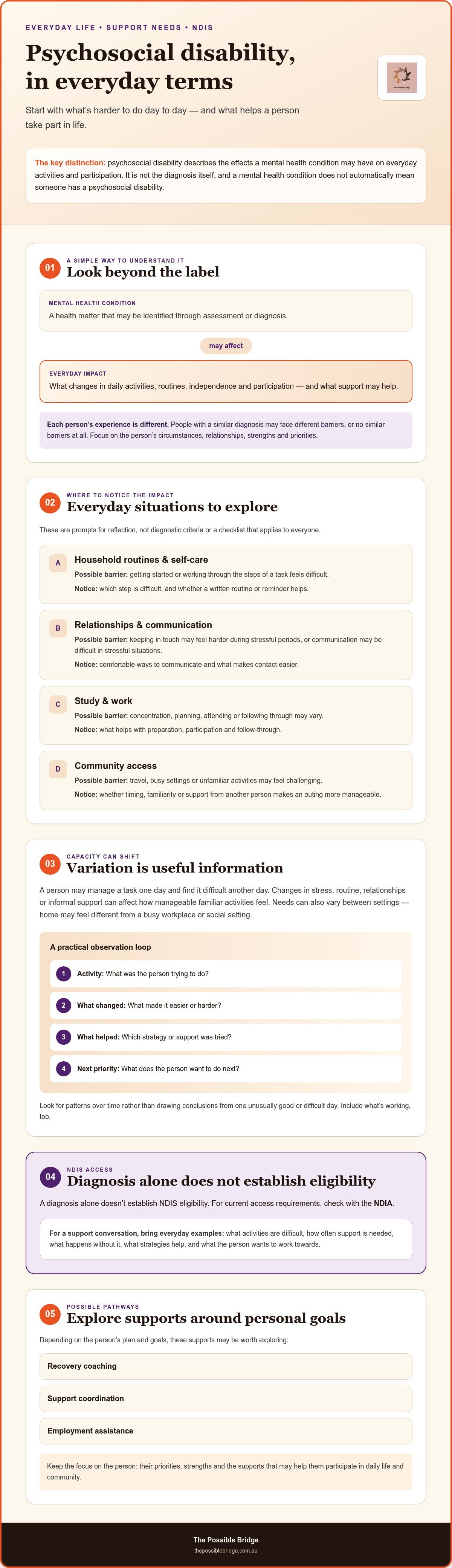
Psychosocial disability is the impact a mental health condition may have on a person’s ability to manage daily activities and take part in social, work, study or community life. It describes the effects someone experiences and the support that may help, not a diagnosis or a judgement about their potential.
The word “psychosocial” recognises that a person’s experiences can be shaped by psychological factors and their social environment. This psychosocial approach keeps the focus on the whole person, including their circumstances, relationships and strengths.
How is psychosocial disability different from a mental health condition?
A mental health condition is a health matter that may be identified through assessment or diagnosis. Psychosocial disability refers to possible effects on everyday functioning. One person may find it difficult to organise appointments or maintain routines, while another with a similar diagnosis may not experience those barriers. A diagnosis alone doesn’t show what support a person needs. Their individual experiences do.
What can psychosocial disability affect day to day?
Impacts can look different from person to person and may change over time. Someone might find it harder to get started on daily tasks, keep in touch with friends, communicate in stressful situations, attend classes or manage the steps involved in work. Taking part in community activities may also feel difficult at particular times. These are examples, not a checklist that applies to everyone.
Support needs can shift with circumstances. Increased stress, changes in routine or reduced informal support from family and friends may make familiar activities harder. At other times, helpful strategies, a steady routine or support from others may make participation more manageable. Needs can also vary between settings. Getting through a task at home may feel different from doing it in a busy workplace or social setting.
For a clearer picture, focus on what happens in practice rather than relying on a label. Consider which activities are difficult, what makes them easier and whether the impact changes across days or situations. This keeps the conversation grounded in the person’s life and helps identify support that reflects their priorities, not assumptions about a diagnosis.
How can you understand the impact of psychosocial disability?
A useful picture comes from everyday detail: what’s difficult, what helps and what changes between situations. Instead of relying on a broad description, look at specific activities and the steps involved. This can help someone explain their experiences without treating the process as a test or judgement.
Which areas of everyday life might be affected?
Consider self-care, household routines, relationships, learning, employment and getting out into the community. A person might usually prepare meals independently, for example, but find planning and cooking harder during a stressful period. They may still have strengths, interests and strategies that help, such as using reminders, choosing familiar activities or asking someone they trust for support.
The prompts below can help organise observations. They aren’t diagnostic criteria, and not every example will apply.
| Everyday situation | Possible barrier | Reflection or support approach |
|---|---|---|
| Household routines | Starting or sequencing tasks feels difficult | Notice which step causes difficulty and whether a written routine or reminder helps |
| Relationships | Keeping in touch feels harder during stressful periods | Identify comfortable ways to communicate and what makes contact easier |
| Study or work | Concentration, planning or attending may vary | Record what helps with preparation, participation and follow-through |
| Community access | Travel, busy settings or unfamiliar activities may feel challenging | Consider what makes an outing manageable, including timing, familiarity or support from another person |
Why can support needs change over time?
Capacity can shift with a person’s circumstances and environment. Changes in routine, stress, relationships or the informal support available may affect how manageable a familiar task feels. That variation isn’t inconsistency. It can show when support may be needed and what conditions help.
Look for patterns over time rather than drawing conclusions from one unusually good or difficult day. A simple note can capture the activity, what made it easier or harder, which strategy was tried and what the person wants to do next. Include what’s working too. A strength, interest or successful approach can help shape practical next steps.
These reflections may also help someone prepare to discuss possible services. For people experiencing severe mental health challenges who aren’t part of the NDIS, the Australian Government’s Commonwealth Psychosocial Support Program is another pathway to explore. If NDIS support is relevant, readers in Bendigo can learn about support coordination and recovery coaching as possible options, depending on their plan, goals and circumstances.
Does a psychosocial disability diagnosis automatically mean NDIS eligibility?
No. A diagnosis alone doesn’t establish access to the NDIS. A mental health diagnosis may be relevant, but the NDIA considers applications against current access requirements and a person’s individual circumstances. Only the NDIA can make an access decision. Don’t assume a particular diagnosis guarantees eligibility or that one person’s experience predicts another’s outcome.
It can help to separate three related ideas. A diagnosis names a health condition identified through assessment. A disability describes significant impacts on everyday functioning. Support needs are the practical assistance that may help someone pursue their goals and participate in daily life. These terms can relate, but they aren’t interchangeable. The NDIS guidance on psychosocial disability explains the scheme’s perspective. Check the NDIA’s current information for formal definitions and access requirements.
When discussing support, focus on what the person wants to do and what gets in the way. Practical examples might include maintaining routines, taking part in work or study, or connecting with the community. These details can make a conversation more useful, but they don’t replace the NDIA’s assessment. For a fuller explanation of the process, see this guide to NDIS eligibility requirements.
What if you’re unsure whether the NDIS is the right pathway?
Start by checking information directly with the NDIA, then consider speaking with an appropriate local community service about other options. Not everyone who needs mental health-related support will access it through the NDIS. Other pathways may be relevant depending on their circumstances.
The Possible Bridge provides NDIS support coordination, psychosocial recovery coaching and employment assistance, but doesn’t provide clinical psychology or crisis intervention. These supports may be relevant if they suit a person’s goals and are included in their plan. They don’t determine NDIS access. If someone is in immediate danger, call 000. For urgent crisis support, contact an appropriate emergency or crisis service.
How can you describe psychosocial support needs and prepare for a conversation?
Preparing to discuss support doesn’t require a detailed report. A few clear examples can help explain what matters in daily life, especially when needs shift between situations. Describe what the person was trying to do, what got in the way and what helped. Those details make support discussions more useful.
Try this simple sequence:
- Notice patterns. Think about routines, relationships, study, work and community activities. What tends to feel manageable, and when does it become harder?
- Record the impact. Briefly note the activity, the barrier and what happened. For example, a person might find it harder to attend an appointment when plans change unexpectedly.
- Identify what helps. Include strategies already in use, support from trusted people and circumstances that make the activity easier.
- Clarify personal goals. Consider what the person would like to work towards and what practical support could help them take a step in that direction.
These notes are prompts, not a test or a required form. Share only what feels comfortable and relevant with the professionals involved. The person can choose what to discuss and ask questions if they’re unsure how information will be used.
What information might help explain your experience?
Keep notes flexible and manageable. A phone note, calendar entry or short conversation with someone trusted may be enough to spot useful patterns. Where relevant, describe what the person was trying to do, what made it harder, what helped and whether the experience changed over time. Include strengths, interests and strategies that are working, as well as support from family, friends or services. There’s no single document everyone needs to prepare.
How can personal goals guide the next support conversation?
Start with what the person wants, whether that’s more independence with daily routines, stronger connections, learning something new or exploring work. Then identify practical barriers and preferences: what type of help feels comfortable, what approaches have worked before and what support the person would rather avoid. Goals can guide a focused conversation, even if the person doesn’t have every answer ready.
If you’re comparing providers, this guide to finding NDIS support that fits your goals offers questions to consider. The Possible Bridge provides support coordination, employment assistance and psychosocial recovery coaching. If you’d like to discuss whether these supports may fit your goals and plan, explore support options with The Possible Bridge.
What support pathways can help someone living with psychosocial disability?
There isn’t one support pathway that suits everyone. The right options depend on a person’s goals, circumstances, existing supports and available funding. Some people may have NDIS-funded supports in their plan; others may explore community or mainstream services. Start by identifying what the person wants help with, then check which options are relevant and available.
How can recovery coaching and support coordination differ?
Psychosocial recovery coaching can offer collaborative support as a person works towards their own recovery goals and builds skills for daily life. Support coordination focuses on helping a participant understand and connect with supports and services related to their plan and goals. The roles are different, though both can help someone take practical steps at their own pace.
These supports aren’t clinical treatment, plan management or crisis care. They don’t replace mental health care through the health system, and they can’t guarantee a particular outcome. Whether either option is suitable depends on the individual and, for NDIS-funded support, what is included in their plan.
How can you take a low-pressure next step in Victoria?
Before contacting a provider, it may help to choose one or two goals and note what kind of assistance would feel useful. You could ask:
- Does the provider offer the support I’m looking for?
- How would they work with my goals and preferences?
- Can they confirm whether support is available in my local area?
- What funding or plan details should I check first?
If work is one of the person’s goals, employment assistance may be worth discussing. Support might relate to building skills or exploring steps towards work, depending on the person’s circumstances and available funding.
The Possible Bridge provides support coordination, psychosocial recovery coaching and employment assistance across Melbourne, Ballarat, Geelong, Bendigo and surrounding Victorian areas. Local coverage and availability can vary, so check what’s currently offered in your area and whether a service matches your needs. You can explore The Possible Bridge’s support services as one possible next step, without assuming a particular service or funding pathway will be right for you.
Take the next step at your own pace
Understanding psychosocial disability starts with the person’s everyday experience: what’s difficult, what helps and what they want to work towards. A diagnosis alone doesn’t establish NDIS eligibility, so check current access information with the NDIA. Specific examples and notes about changing needs can help clarify priorities when discussing support.
The right support depends on individual goals, circumstances and available funding. The Possible Bridge offers support coordination, psychosocial recovery coaching and employment assistance across Melbourne, Ballarat, Geelong, Bendigo and surrounding regional areas. Availability can vary, so check what’s currently offered in your area and whether it fits your needs.
If you’re ready to explore possible next steps, explore support options with The Possible Bridge. You don’t need every answer before starting a conversation. One clear goal can be a good place to begin.
Frequently Asked Questions
What is psychosocial disability?
Psychosocial disability describes how a mental health condition may affect someone’s everyday functioning and participation. It isn’t a diagnosis in itself. The experience is personal and can change over time, so the term shouldn’t be used to assume what someone can do or what assistance they need. When discussing support, focus on the person’s experiences, goals and the practical effects they describe.
Is psychosocial disability the same as mental illness?
No. Mental illness refers to a health condition, while psychosocial disability describes possible effects on daily life and participation. Not everyone with a mental health condition experiences disability, and people with the same diagnosis may have different circumstances and support needs. Person-centred language keeps the focus on the individual rather than assuming a diagnosis explains their abilities, challenges or preferences.
Can you have psychosocial disability without an NDIS plan?
Yes. The term can describe a person’s lived experience whether or not they have an NDIS plan. NDIS access is a separate decision made under current scheme requirements. Depending on individual circumstances, community, health or local support options may also be relevant. Check the NDIA’s official information for current access details, then explore pathways that fit the person’s needs and goals.
Does a psychosocial disability diagnosis automatically qualify someone for the NDIS?
No. A diagnosis alone doesn’t guarantee NDIS access. The NDIA considers applications under its current access requirements and the information provided about the person’s circumstances. Requirements may change, so check the latest official NDIA guidance rather than relying on assumptions. For a broader explanation of the process, read this guide to NDIS eligibility requirements.
How can I explain psychosocial disability support needs?
Describe a specific situation: what you were trying to do, what made it harder and what helped. Examples might relate to routines, relationships, work, study or community participation. If your needs fluctuate, noting patterns over time can add useful context. Include strategies and support already in place, and focus on what would help you pursue your goals. Share only information you feel comfortable discussing.
What does a psychosocial recovery coach do?
A psychosocial recovery coach works collaboratively with an NDIS participant on personal recovery goals and practical steps, where this support is included in their plan. The approach should reflect the person’s preferences, strengths and circumstances. Recovery coaching isn’t clinical psychology or crisis intervention. Before choosing a provider, ask about their approach, local availability and whether the support fits your goals and plan.
Where can I find psychosocial disability support in Victoria?
Start by identifying the support you’re looking for, such as recovery coaching, support coordination or employment assistance. Check whether a provider’s approach and local availability suit your circumstances and goals. The Possible Bridge operates across Melbourne, Ballarat, Geelong, Bendigo and surrounding regional areas. Coverage and availability can vary, so contact the provider to confirm current options in your area.


